As a parent, you want the best for your child's health, and that includes their smile. But figuring out when to schedule that first orthodontic visit can feel confusing. Many San Antonio families ask, "How do I know if my child needs an orthodontist yet?" You might wonder if seven is too young, or whether you should wait until all the baby teeth fall out. What if you miss the right window?
Here's the good news: you don't have to guess. Knowing when your child needs an orthodontist starts with understanding the signs and recommended timing for an evaluation. That knowledge helps you make confident decisions about your child's dental development.
What Is an Early Orthodontic Evaluation, and Why Does It Matter?
An early orthodontic evaluation is a screening performed around age 7, when children have a mix of baby and permanent teeth. It allows an orthodontist to detect jaw growth, spacing, and bite concerns before they become complex, without starting treatment. The American Association of Orthodontists recommends this timeline, and orthodontists across the San Antonio area follow the same guideline with every family they see.
By age 7, that combination of baby teeth and permanent teeth gives an orthodontist enough information to spot subtle concerns with jaw growth, tooth spacing, and bite alignment. An early evaluation isn't the same as starting treatment. Think of it as a screening. Most kids evaluated at this age won't need immediate intervention. Instead, they'll be monitored over time.
Your child's general dentist does excellent work checking for cavities and overall oral health. Orthodontists, though, complete two to three additional years of specialized training focused specifically on tooth movement, jaw development, and bite correction. That training allows them to detect issues that might not be obvious during a routine dental checkup.
Early detection matters because some concerns are easier to address while your child is still growing. Catching a developing issue now can prevent more involved treatment later.
What Happens During a Child's First Orthodontic Visit?
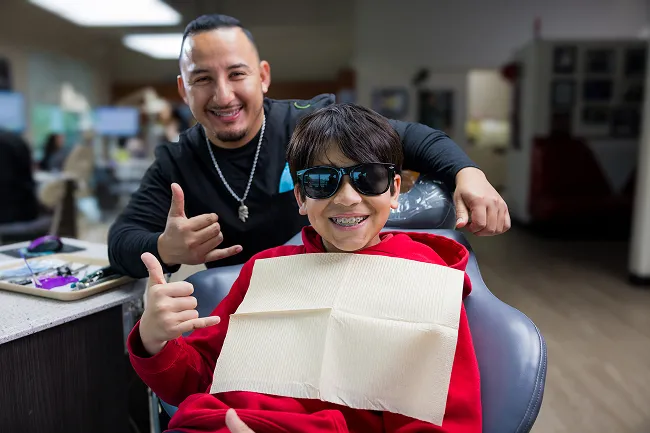
A first orthodontic visit is straightforward and comfortable for kids. There's no treatment on day one, just information gathering. The exam covers how teeth and jaws fit together, digital X-rays reveal what's happening beneath the gums, and the team checks for oral habits that may affect development.
During the visual examination, the focus is on how the jaw moves and whether the bite aligns properly. Digital imaging helps assess teeth that haven't erupted yet and shows how the bone structure is developing.
Your child's orthodontist will also look for habits that can affect dental development:
- Mouth breathing during the day or while sleeping
- Thumb sucking or prolonged pacifier use
- Tongue thrust (pushing the tongue against teeth when swallowing)
- Teeth grinding
After the examination, you'll receive a clear recommendation. Your orthodontist might suggest monitoring your child's development with periodic check-ins, recommend early intervention for a specific issue, or advise waiting until more permanent teeth come in. You'll leave with a timeline and a plan, so you'll know exactly where things stand.
How to Know If Your Child Needs an Orthodontist: Benefits of Catching Issues Early
Catching orthodontic issues early offers several key benefits: it allows your child's orthodontist to guide jaw growth while bones are still developing, reduces the risk of injury to protruding front teeth, can eliminate the need for extractions by creating space naturally, and often leads to shorter treatment during the teen years.
How Can Early Detection Guide Jaw Growth and Protect Teeth?
While bones are still developing, orthodontists can influence how the upper and lower jaws grow in relation to each other. This window closes once skeletal growth is complete, which is why timing matters so much.
Front teeth that stick out significantly are also more vulnerable to injury during sports and play. Identifying and addressing this early can reduce the risk of dental trauma during active childhood years. Creating space naturally in many cases means families can avoid the need for extractions down the road.
Can Early Treatment Simplify Future Care and Build Confidence?
Addressing skeletal issues early often means shorter, less involved treatment during the teen years. Families who go through Phase 1 treatment during childhood frequently find that Phase 2 requires less time and fewer adjustments.
Children become increasingly aware of their appearance during elementary school. Addressing visible concerns early can boost self-esteem during formative social years.
Early Intervention vs. Waiting: When Does Timing Really Matter?
One of the most common questions parents ask is whether their child needs treatment now or can wait. The answer depends entirely on what's happening in your child's mouth.
| Issue Type | Early Intervention Often Recommended | Waiting Usually Appropriate |
|---|---|---|
| Crossbite (upper teeth inside lower) | ✓ | |
| Severe crowding | ✓ | |
| Protruding front teeth at risk of injury | ✓ | |
| Underbite with jaw growth concerns | ✓ | |
| Mild spacing issues | ✓ | |
| Minor tooth rotation | ✓ | |
| Cosmetic alignment concerns | ✓ |
Some issues, like crossbites, can cause the jaw to shift and grow asymmetrically if left untreated. Addressing these while your child is still growing produces better results than waiting. Two-phase treatment is sometimes recommended for children with both skeletal and alignment concerns. Phase 1 addresses jaw-related issues during childhood, while Phase 2 fine-tunes tooth alignment during adolescence.
On the other hand, mild alignment issues often respond well to treatment during the teen years when most permanent teeth have erupted. A skilled orthodontist helps families understand this distinction clearly: "this needs attention now" versus "let's keep an eye on it." That's exactly why the evaluation matters.
What Factors Affect the Cost of Children's Orthodontic Care?
The cost of children's orthodontic care depends on several factors. Here are the main ones San Antonio families should consider:
- Complexity of the issue. Skeletal concerns involving jaw growth typically require more specialized treatment than straightforward tooth alignment. The more involved the case, the more time and expertise required.
- Treatment phases. Two-phase treatment may have a higher total cost than single-phase treatment. That said, early intervention can sometimes prevent the need for more extensive treatment later, potentially saving money over time.
- Insurance coverage. Many dental insurance plans include orthodontic benefits for children under 18. Coverage varies widely by plan, so checking your specific details before your first visit is worthwhile.
- Payment flexibility. Ask about interest-free financing and low monthly payment options that make treatment accessible for families. Online payment calculators or cost estimators can also help when researching your options.
A free consult allows families to understand exactly what their child needs and plan financially with no surprises.
Signs Your Child May Be Ready for an Orthodontic Evaluation
You don't need to wait for obvious concerns to schedule an evaluation. That said, certain signs suggest your child would benefit from seeing an orthodontist sooner rather than later.
Watch for these indicators:
- Unusual tooth loss patterns. Losing baby teeth much earlier or later than peers can signal underlying alignment issues.
- Chewing difficulties. Trouble biting into foods, frequent cheek biting, or avoiding certain textures may point to bite concerns.
- Mouth breathing or snoring. If your child breathes through their mouth during the day or snores at night, this can relate to jaw development and airway issues.
- Jaw sounds or movement. Clicking, popping, or the jaw shifting to one side when opening or closing deserves attention.
- Visible misalignment. Teeth that appear crowded, have large gaps, or don't line up properly are worth having evaluated.
- Facial asymmetry. One side of the face appearing different from the other, or an imbalanced profile view, may indicate a skeletal concern.
Even if none of these signs are present, the age 7 evaluation remains valuable. Some issues aren't visible to parents but are detectable by a trained orthodontist. Families across the San Antonio area often discover concerns during these routine screenings that they never would have noticed on their own.
If you have questions about your child's smile, your orthodontist can help you understand what's happening and whether the timing is right for treatment.
Frequently Asked Questions About Children and Orthodontics
At what age should my child first see an orthodontist?
The American Association of Orthodontists recommends an initial evaluation by age 7. At this age, children have enough permanent teeth for an orthodontist to assess development accurately. This doesn't mean treatment starts at 7. It means screening begins then, so your orthodontist can monitor growth and step in only when needed.
Can my child's dentist tell me if braces are needed?
Your dentist may notice alignment concerns and refer you to an orthodontist. Orthodontists have specialized training in jaw development and tooth movement that goes beyond general dentistry. A dentist's screening is helpful, but an orthodontic evaluation provides a more complete picture of what's happening beneath the surface.
Is early treatment always necessary?
No. According to the American Association of Orthodontists, most children evaluated at age 7 don't need immediate treatment. Children who don't need immediate care are typically placed on a monitoring schedule, with their orthodontist tracking development over time. Early treatment is reserved for specific situations where intervention during growth provides clear benefits.
What happens if I wait too long?
Some corrections become more difficult, or even impossible, once growth is complete. Jaw-related issues, in particular, are easier to address while bones are still developing. Waiting too long can mean more involved options down the road, including the possibility of jaw correction in severe cases.
Does my child need braces if their baby teeth are uneven?
Not necessarily. Uneven baby teeth don't always predict how permanent teeth will come in. An orthodontic evaluation can determine whether the underlying jaw structure and spacing will support healthy permanent tooth eruption. It's better to know than to wonder. Many San Antonio families schedule an evaluation around age 7 simply for peace of mind, and that's a perfectly good reason to come in.